Source-backed analysis13
Review basis
Research-based review: the AppDuo Editorial Team compiled it from official pages, documentation, app stores, press and user feedback, without hands-on testing. Every claim links to a source with the date it was checked.
13 reference sourcesInformation updated Nov 11, 2026
How we review
OpenCode Review
Open-source coding agent for terminal and desktop that works with many models
By AppDuo Editorial Team · Fact-checked
- macOS
- Windows
- Linux
- iOS
- Web
- API
On this page
Decide at a glance
Our verdict
OpenCode suits developers who want an open-source agent that isn't tied to one model vendor and lets them choose how to pay. The trade-offs: a young project that patched four flaws allowing command execution on users' machines in 2026 alone, and no documented interface language besides English.
Best for: Developers who want to swap models and providers freely, including local models
Skip it if: Teams that need clearly published enterprise support and security commitments
Pros
- MIT-licensed open source; 200+ model providers via Models.dev, including local models (per the home page)
- Terminal, desktop (macOS, Windows, Linux), web and SDK, plus an iPhone app via TestFlight
- MCP, plugins, custom agents, SKILL.md skills, slash commands and per-action permissions
Cons
- Four flaws allowing command execution on users' machines surfaced in 2026, including the Critical-rated CVE-2026-22813; all are patched, so staying up to date matters
- Direct Claude subscription login was removed in February 2026; Claude now needs an API key or a separately installed Claude Code
All pros and cons · Who is it for?
More pros
- Free software; Go at $10/month or pay-as-you-go Zen, with possible Go refunds within 14 days if almost unused
More cons
- Go limits are estimates and vary widely between models
- No user ratings on app stores or review sites
Best for
- People already paying for ChatGPT Plus/Pro or GitHub Copilot who want to reuse it in one agent
Skip it if
- Anyone who wants a ready-to-go tool without choosing and connecting models themselves
Experience & key features
What OpenCode is
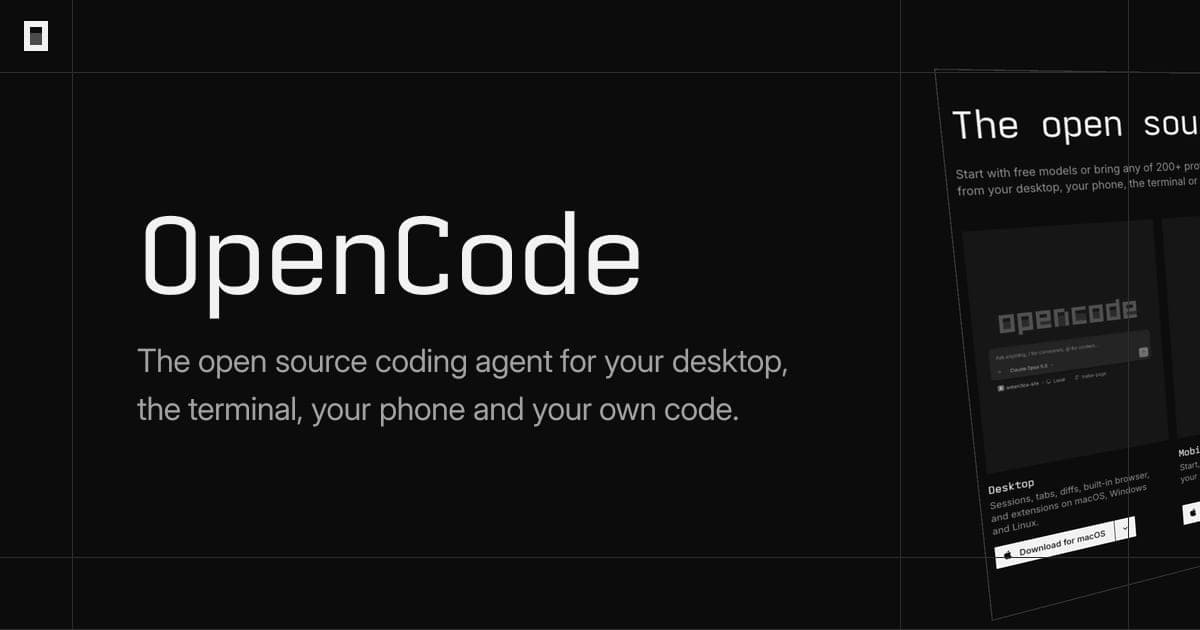
OpenCode is an open-source coding agent from Anomaly, released under the MIT license. Per its home page it runs in the terminal, as a desktop app (macOS, Windows, Linux) and on the web, with an iPhone app via TestFlight and Android listed as coming soon. The GitHub repo has about 226,000 stars.
How it works and key features
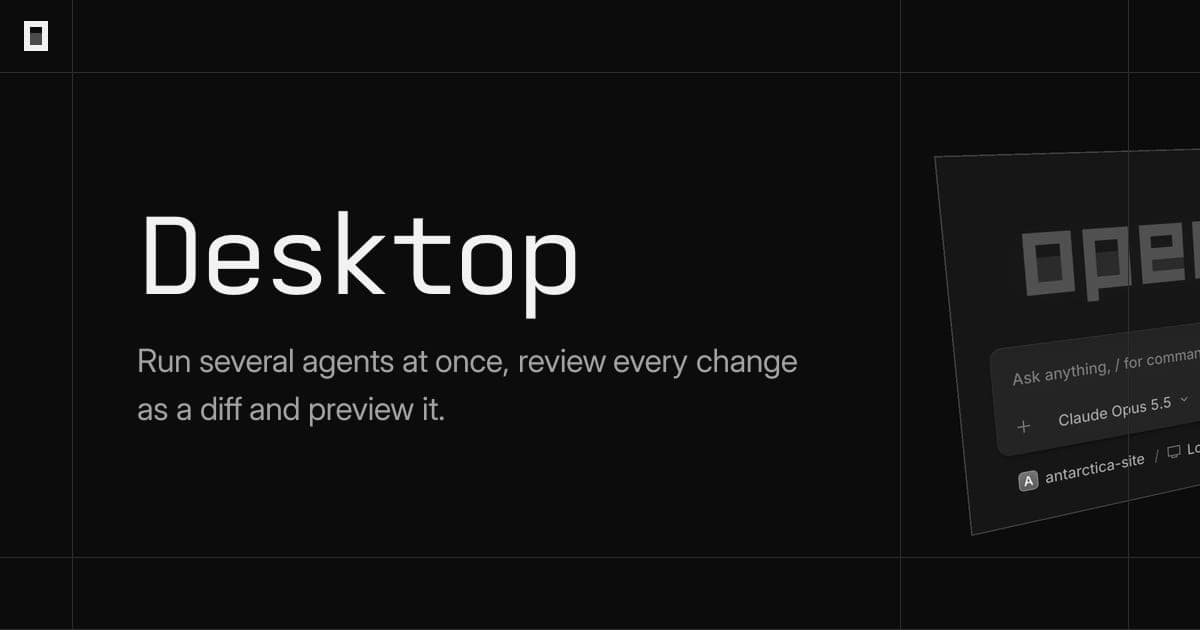
You connect models with /connect: your own API keys, a plan you already pay for such as ChatGPT Plus/Pro or GitHub Copilot, or OpenCode's Go/Zen services. You can run several agents in parallel on one project, attach MCP servers, write plugins, create custom agents and commands, teach agents workflows in SKILL.md files, choose which actions need approval and roll back with /undo. The opencode pair command issues a one-time connection link that expires after 5 minutes.
Pricing and value
The software itself is free. If you want OpenCode to supply the models too, there is Go ($10/month, 32 curated models), Go Plus ($40/month, higher limits), Go Teams without a published price, and Zen, billed per token with a 4.6% + $0.31 fee on each credit purchase. The pricing page gives only estimated request counts and calls them illustrative, so real usage may differ. No official VND prices are published.
More analysis
Versus alternatives
OpenCode competes with Claude Code, OpenAI Codex, Cline and Kilo Code. Its main distinction is being open source and not tied to one model vendor. Two points to weigh: since January 2026 Anthropic has blocked Claude subscription OAuth from third-party tools (v2.2.3 in late October 2026 added a route through a separately installed Claude Code), and in 2026 the tool patched four command-execution flaws, one rated Critical.
Screenshots
Plans & pricing
Prices last verified Nov 11, 2026
OpenCode (mã nguồn mở)
PersonalFree
MIT-licensed and free. Bring your own API keys or sign in with a plan you already pay for (ChatGPT Plus/Pro, GitHub Copilot). Includes some models that are free for a limited time, no account needed.
Go
Personal$10/mo
$10/month, billed monthly only. Fixed subscription for 32 curated models. Limits apply over 5-hour, weekly and monthly windows; the pricing page estimates about 110 requests per 5 hours with Kimi K3 and 3,850 with Claude Haiku 5.5. Once you hit the limits, requests draw on added credit.
Go Plus
Personal$40/mo
$40/month. Go with higher limits (about 440 requests per 5 hours with Kimi K3). The page says figures are estimates based on typical usage.
Go Teams
BusinessContact sales
Listed on the pricing page with no published price or seat pricing; Extra Usage is on by default.
Zen (trả theo dùng)
APIContact sales
Pay as you go, priced per 1M tokens and charged per request. Each credit purchase carries a 4.6% + $0.31 processing fee.
- Free plan limits
- Some models are free for a limited time, e.g. LongCat 2.5 Free at 100 requests/day; some free models are unavailable in certain countries. Set OPENCODE_DISABLE_FREE_MODELS=1 to hide them.
- Free trial
- No free trial
Cancellation & refunds
Go: you may qualify for a refund if you ask within 14 days of the charge and have used almost none of that period's allowance. Email [email protected] with the subject "Go refund". The Zen docs state no refund policy.
Privacy
Per the privacy policy (effective Nov 9, 2026), prompts are passed through to the upstream model provider and not stored, except for hosted agent sessions (deleted 30 days after last activity). opencode.ai uses cookies and first-party analytics, with no third-party analytics services. For Zen, the docs say providers generally follow a zero-retention, no-training policy, with exceptions: some free models may use data to improve the model, and the OpenAI and Anthropic APIs retain requests for 30 days. With your own API keys, the model provider's terms apply.
OpenCode alternatives
 7.5/10
GitHub Copilot
An AI coding assistant that runs in most major IDEs and ties into GitHub
 7.4/10
Claude Code
Anthropic's coding agent across terminal, IDE, web and CI
Controversies & incidents
Issues documented by the press, regulators, courts or the vendor itself. Every item is sourced; unproven claims are labelled as allegations. Last researched: Nov 11, 2026
- Medium impactResolvedSecurity ·
MCP OAuth code-execution flaw on Windows/WSL (versions 1.0.137 to 1.18.32)
Per Pillar Security (via DeepInspect), an attacker-controlled remote MCP server could execute code on Windows and WSL. Fixed in 1.18.33.
Read the full account
DeepInspect (page dated Oct 19, 2026) describes data returned by a remote MCP server during OAuth authentication reaching an OS command injection sink, with no further user interaction needed once the MCP connection starts. Pillar Security proposed a CVSS 3.1 score of 9.8. Anomaly released 1.18.33 on Sep 28, 2026, before the research was disclosed; no CVE or vendor advisory was issued. Users should upgrade to 1.18.33 or later.
Vendor response
Per DeepInspect, Anomaly shipped the fix in 1.18.33 before Pillar Security's disclosure but published no advisory.
Sources:DeepInspect: OpenCode MCP OAuth remote code execution
- Medium impactResolvedSecurity ·
Upgrade endpoint let websites install arbitrary npm packages (1.14.30 to 1.18.21)
Per Datadog Security Labs, with opencode serve or opencode web running without a password and OpenCode installed via npm, pnpm or Bun, a malicious webpage could make the machine install an attacker's npm package and run its code. Fixed in 1.18.22.
Read the full account
Datadog Security Labs (Sep 24, 2026) reports that the /global/upgrade endpoint accepted arbitrary install targets and mishandled request content types. A malicious webpage could make the browser send a form POST to the local server, which then installed an attacker-hosted npm package whose preinstall script ran on the machine. The bug shipped in 1.14.30 (Apr 30, 2026). Datadog reported it via GitHub on Aug 11, 2026; Anomaly released the fix in 1.18.22 on Aug 24, 2026 and asked for a one-month publication delay. Advisory GHSA-632h-h47v-g4x4 rates it High (CVSS 7.5) and says installs via curl, Homebrew, Chocolatey or Scoop are not affected.
Vendor response
Anomaly fixed it about two weeks after the report and published an advisory. Per Datadog, it chose not to request a CVE, arguing that CVEs for GitHub Security Advisory reports encourage many low-quality submissions.
Sources:Datadog Security Labs: OpenCode upgrade remote code executionOpenCode security advisory GHSA-632h-h47v-g4x4
- Medium impactResolvedSecurity ·
CVE-2026-22812 and CVE-2026-22813: websites could run commands on users' machines
On Jan 12, 2026, two GitHub advisories disclosed an unauthenticated HTTP server (High, CVSS 8.8) and a web UI XSS flaw (Critical, CVSS 9.4), both allowing command execution on users' machines. Fixed in 1.0.216 and 1.1.10.
Read the full account
Advisory GHSA-vxw4-wv6m-9hhh states OpenCode auto-started an unauthenticated HTTP server that any local process, or any website via permissive CORS, could use to run shell commands as the user; the --mdns flag binds it to 0.0.0.0, exposing it to the local network. The reporter (CyberShadow) says they emailed [email protected] on Nov 17, 2025 under the project's security policy and got no response. The second advisory, GHSA-c83v-7274-4vgp (reported by AlbertSPedersen), describes a website abusing the web UI's server-URL override to run JavaScript on localhost:4096 (the markdown renderer did not sanitise HTML), then calling the /pty/ endpoints to run commands. Both advisories were published by thdxr on the anomalyco/opencode repo.
Vendor response
Anomaly shipped fixes in 1.0.216 and 1.1.10 and published both advisories on its official repo.
Sources:GitHub Advisory GHSA-vxw4-wv6m-9hhh (CVE-2026-22812)GitHub Advisory GHSA-c83v-7274-4vgp (CVE-2026-22813)
Show 1 more
- Medium impactConfirmedOther ·
Anthropic blocks Claude subscription OAuth access from OpenCode
Per Shareuhack, early OpenCode versions spoofed a Claude Code header to reach Claude via OAuth; Anthropic blocked this from Jan 9, 2026 and updated its docs on Feb 19, 2026. OpenCode removed the related code.
Read the full account
Shareuhack reports that early OpenCode versions sent the claude-code-20250219 beta header so Anthropic's servers treated requests as coming from the official Claude Code CLI. On Jan 9, 2026 Anthropic switched on server-side blocking; Anthropic's Thariq Shihipar said it had "tightened our safeguards against spoofing the Claude Code harness", and some accounts banned by mistake were reinstated. On Feb 19, 2026 Anthropic added docs saying Free, Pro and Max OAuth tokens may not be used in third-party tools; the same day, OpenCode commit 973715f removed the header, the built-in Anthropic auth plugin and an Anthropic-specific prompt file. The article reports no lawsuit and quotes no formal OpenCode statement. Anthropic's primary documents were not checked.
Vendor response
Per Shareuhack, OpenCode's public response was a Feb 19, 2026 commit removing its Claude OAuth code.
Frequently asked questions
Is OpenCode free?
The software is MIT-licensed open source and free to use. You still pay for models: your own API keys, an existing plan, Go from $10/month or pay-as-you-go Zen. Some models are free for a limited time.
Can OpenCode use a Claude Pro/Max subscription?
Per Shareuhack, Anthropic blocked OpenCode's OAuth access from Jan 9, 2026 and OpenCode removed the related code on Feb 19, 2026. Since v2.2.3 (Oct 30, 2026), the changelog describes installing Claude Code, logging in with claude auth login and selecting Claude Agent in /connect; it doesn't say which Claude plans this works with. Pay-per-use Anthropic API keys also work.
Does OpenCode store my code or prompts?
The privacy policy says prompts are passed to the model provider and not stored, except hosted agent sessions (deleted after 30 days of inactivity). Model providers have their own policies; for Zen, the OpenAI and Anthropic APIs retain requests for 30 days.
Has OpenCode had serious security flaws?
Yes. In 2026 four flaws let a malicious website or MCP server run commands on users' machines: CVE-2026-22812 (fixed in 1.0.216), CVE-2026-22813 (fixed in 1.1.10), an upgrade-endpoint flaw (fixed in 1.18.22) and an MCP OAuth flaw on Windows/WSL (fixed in 1.18.33). Use 1.18.33 or later.
Is there a mobile app?
The home page lists an iPhone app via TestFlight; Android is listed as coming soon.
Review evidence & sources13
Scores
- Ease of use
- 6.5
- Features
- 8.0
- Value for money
- 8.0
- Performance
- 7.0
- Support
- 6.5
- Privacy & security
- 6.0
Why this score
Many install routes (curl, npm, Homebrew, etc.) and a desktop app, but you connect models yourself, and only an English interface is documented.
Why this score
Parallel agents on one project, MCP, plugins, custom agents and skills, /undo and an SDK; scope comparable to leading coding agents.
Why this score
Free software that works with your own keys or existing plans, with Go from $10/month; held back by estimate-only limits and Zen's 4.6% + $0.31 top-up fee.
Why this score
Quality depends on the model you pick. The changelog shows a fast release pace (2.2.0 to 2.2.6 in about 10 days); no independent benchmarks were found.
Why this score
Docs and [email protected] email, with no published response time. The CVE-2026-22812 reporter says an email to [email protected] on Nov 17, 2025 went unanswered; by contrast, Datadog credited Anomaly with quick patching and open communication on the flaw it reported in August 2026.
Why this score
The policy says prompts aren't stored, the website uses no third-party analytics, and Zen generally avoids retention and training (except some free models). Marked down for four 2026 flaws that allowed command execution through the local server, web UI or MCP OAuth flow, all since patched.
Sources
- Vendor-providedOpenCode official home pageNov 11, 2026
- Vendor-providedOpenCode Go pricing pageNov 11, 2026
- Vendor-providedOpenCode docsNov 11, 2026
- Vendor-providedOpenCode Zen docsNov 11, 2026
- Vendor-providedOpenCode privacy policyNov 11, 2026
- Vendor-providedOpenCode changelogNov 11, 2026
- Vendor-providedOpenCode GitHub repositoryNov 11, 2026
- Vendor-providedGitHub Advisory GHSA-vxw4-wv6m-9hhh (CVE-2026-22812)Nov 11, 2026
- Vendor-providedGitHub Advisory GHSA-c83v-7274-4vgp (CVE-2026-22813)Nov 11, 2026
- Vendor-providedOpenCode security advisory GHSA-632h-h47v-g4x4Nov 11, 2026
- pressDatadog Security Labs: OpenCode upgrade remote code executionNov 11, 2026
- pressShareuhack: OpenCode Banned by AnthropicNov 11, 2026
- pressDeepInspect: OpenCode MCP OAuth remote code executionNov 11, 2026
Specs & compatibility
- Developer
- Anomaly
- Headquarters
- United States
- Launched
- 2025
- Category
- DevelopmentAI
Capabilities
- Open source
- AI features
- Public API
- Integrations
Platforms
- macOS
- Windows
- Linux
- iOS
- Web
- API
Interface languages
- English
Integrations
- MCP
- GitHub Copilot
- ChatGPT Plus/Pro
- Models.dev (200+ providers)
- SDK for scripts and CI
Support
- Community forum
- Help center
Change history
- Feature.v2.2.6: shared MCP connections across projects, scripted runs in worktrees and a touch composer dock on phones and tablets.
- Feature.v2.2.3: use Claude Code inside OpenCode by selecting Claude Agent in /connect.
- Feature.v2.2.0: experimental Desktop plugins and a refreshed Desktop app; the OpenCode GitHub Action is no longer published.
Full change history (8)
- Update.Version 1.18.33 fixes a code-execution flaw in the MCP OAuth flow on Windows/WSL (per DeepInspect).
- Update.Version 1.18.22 fixes an upgrade-endpoint flaw that let websites install arbitrary npm packages (per Datadog Security Labs).
- Update.Anthropic documents a ban on Claude plan OAuth in third-party tools; the same day OpenCode removes its Claude OAuth code (per Shareuhack).
- Update.CVE-2026-22812 and CVE-2026-22813 published; versions 1.0.216 and 1.1.10 fix the unauthenticated HTTP server and web UI XSS flaws.
- Update.Anthropic deploys server-side protections blocking unofficial OAuth access to Claude, affecting OpenCode (per Shareuhack).
About the author
Reviews & comments
Written by readers with a verified email address.
No reviews yet. Have you used OpenCode? Share your real experience.
Reader reviews are counted separately and do not affect the Editorial Team’s score.
No comments yet. Be the first to share your experience.
Comments are readers’ opinions, not content from the AppDuo Editorial Team.