Source-backed analysis8
Review basis
The AppDuo team prepared this review by analysing product features, official documentation and user feedback to help you understand its strengths, limitations and suitability for your needs.
8 reference sourcesInformation updated Nov 10, 2026
How we review
Google Cloud Review
Google's cloud platform with 100+ products, strong in data, containers and AI
By AppDuo Editorial Team · Updated
- Web
- iOS
- Android
- API
On this page
Decide at a glance
Our verdict
Google Cloud suits engineering teams that need big-data analytics (BigQuery), Kubernetes (GKE) or AI services and want to stay in one ecosystem with Firebase and Google Workspace. The trade-offs are per-service pricing that is hard to estimate, a very wide catalog that demands background knowledge, and a trial offer limited to new customers.
Best for: Data teams and engineers who need BigQuery, Looker analytics or Kubernetes workloads
Skip it if: Beginners who only need a small server at a predictable fixed monthly price
Pros
- Broad catalog: VMs, containers, serverless, databases (Cloud SQL, Spanner, Bigtable), analytics (BigQuery), AI and networking
- $300 trial credit over 90 days and a monthly Free Tier for Compute Engine, Cloud Storage, BigQuery and Cloud Run
- Many ways to use it: web console, gcloud CLI, APIs, client libraries for C#, Go, Java, Node.js, Python, Rust and tools such as Terraform
Cons
- No flat plan price; cost depends on each service and usage, making estimates harder
- A card or valid payment method is required even for the free trial, which is limited to new customers
All pros and cons · Who is it for?
Pros
- Default encryption at rest, with ISO 27001, SOC 2 and SOC 3 coverage
Cons
- The Free Tier is limited by product and region (for example the e2-micro VM in three US regions only) and does not roll over
- Paid support is a separate purchase (Standard, Enhanced, Premium) and its pricing is not stated on the docs page
Best for
- Startups and developers who want to experiment with $300 of credit over 90 days plus the monthly Free Tier
- Organizations already on Firebase or Google Workspace that want infrastructure from the same vendor
Skip it if
- Teams that need data pinned to one country without first verifying each service's location commitment
Experience & key features
What Google Cloud is
Google Cloud is Google's cloud computing platform for running, testing and deploying applications. According to Wikipedia, Google lists more than 100 products under the brand; the first service was App Engine, previewed in April 2008 and generally available in November 2011, and Compute Engine was previewed in June 2012 and reached general availability in May 2013. The official docs group products into AI and ML, application development, application hosting (serverless, GKE), compute, data analytics (BigQuery, Looker), databases (Cloud SQL, Spanner, Bigtable), networking, security, observability and storage.
How you use it
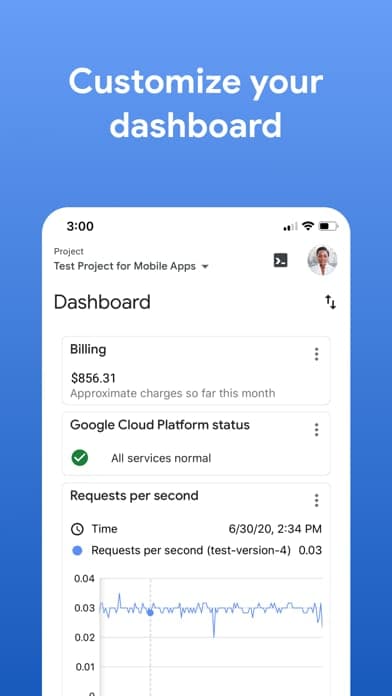
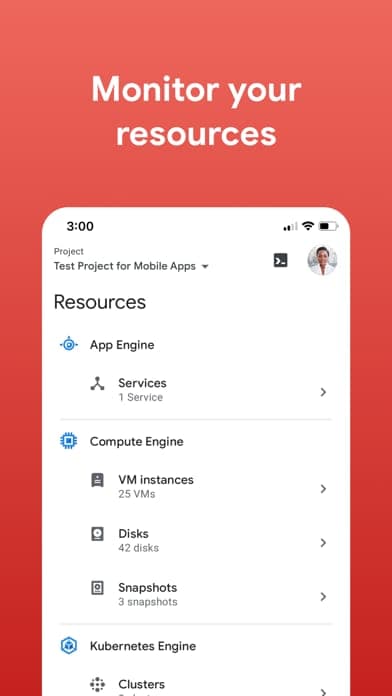
There are four main ways in: the web console, the Google Cloud CLI (gcloud), direct API calls and client libraries for C#, C++, Go, Java, Node.js, PHP, Python, Ruby and Rust. Infrastructure as code works with Terraform, Pulumi or Ansible. A Google Cloud app for iOS and Android covers billing, status, logs and Cloud Shell. Google also originated Kubernetes, announced in June 2014 with v1 in July 2015; GKE is Google Cloud's managed Kubernetes service.
Pricing and value
Google Cloud has no flat plan price list: each service is billed by usage. New customers receive a $300 Welcome credit over 90 days on providing a payment method; anyone who has been a paying Google Cloud, Google Maps Platform or Firebase customer is ineligible. After the trial, a monthly Free Tier remains for some products, such as one e2-micro VM, 5 GB-months of Cloud Storage, 1 TiB of BigQuery querying and 2 million Cloud Run requests. Paid support comes in Standard, Enhanced and Premium; the support docs page does not list prices.
More analysis
Who it is for
Google Cloud suits engineering teams already familiar with infrastructure concepts who need data, containers or AI at scale. If you only need a ready-made app backend, Firebase is in the same ecosystem and easier to start with. For like-for-like vendor comparison there are AWS and Microsoft Azure, while DigitalOcean targets simpler needs. This is a judgment from public documentation, not AppDuo hands-on testing.
Screenshots
Plans & pricing
Prices last verified Nov 10, 2026
Free Trial & Free Tier
Free
New accounts get a $300 Welcome credit to spend over 90 days and must provide a credit card or other valid payment method. The monthly Free Tier includes one e2-micro Compute Engine VM (us-west1, us-central1, us-east1) with 30 GB-months of disk; 5 GB-months of US regional Cloud Storage; 1 TiB of BigQuery querying and 10 GiB of storage; 2 million Cloud Run requests; 2 million Cloud Run functions invocations. Unused limits do not roll over.
Pay as you go
Contact sales
Priced per service and usage, with no flat plan price; see each product's pricing page. Paid support packages are Standard, Enhanced and Premium; the support docs page states no prices or response times.
- Free plan limits
- The monthly Free Tier remains available after the trial credit ends, but only for certain products and regions; usage beyond the limits is billed at standard rates.
- Free trial
- 90-day free trial · credit card required
Cancellation & refunds
Only people who have never been paying Google Cloud, Google Maps Platform or Firebase customers and have not signed up for the trial before are eligible for the $300 credit. Google places a temporary $0.00 to $1.00 authorization hold that is not a charge. The pages read state no refund policy.
Privacy
Per the official Data Processing Addendum, Google is a processor of customer personal data and processes it only to provide, secure and monitor the services under the customer's instructions. When a customer deletes data through the services, Google deletes it within 180 days. Data may be processed in any country where Google or its subprocessors have facilities, subject to service-specific location commitments. Google maintains ISO 27001 certification and annual SOC 2 and SOC 3 reports, and gives at least 30 days' notice before adding a subprocessor. The encryption docs state that all customer content is encrypted at rest by default (AES-256, with a few legacy disks on AES-128); customer-managed keys through Cloud KMS are optional. Customers remain responsible for securing credentials and maintaining backups.
Google Cloud alternatives
 7.8/10
DigitalOcean
Simple cloud with transparent pricing for developers and small teams
 7.6/10
Amazon Web Services
The largest cloud platform: pay-as-you-go, from servers to AI
Frequently asked questions
Is Google Cloud free?
New customers get $300 of credit over 90 days and must provide a payment method. There is also a monthly Free Tier for some products; usage above the limits is billed at standard rates.
What does the Free Tier include?
Per the official docs, each month includes one e2-micro VM, 30 GB-months of disk, 5 GB-months of Cloud Storage, 1 TiB of BigQuery querying and 10 GiB of storage, 2 million Cloud Run requests and 2 million Cloud Run functions invocations. Unused limits do not roll over.
Is my data encrypted?
Google states that all customer content is encrypted at rest without any action, mainly with AES-256. You can use customer-managed keys through Cloud KMS for added control.
How is Google Cloud different from Firebase?
Firebase is a ready-made backend suite for mobile and web apps; Google Cloud is the broader infrastructure platform. They are linked: a Firebase project on the Blaze plan uses a Cloud Billing account and can use Google Cloud services.
Review evidence & sources8
Scores
- Ease of use
- 6.5
- Features
- 9.0
- Value for money
- 7.0
- Performance
- 7.5
- Support
- 6.5
- Privacy & security
- 8.0
Why this score
A web console, gcloud and a mobile app are available, but a catalog of 100+ products across many groups takes newcomers time to learn. The Google Cloud app is rated 3.3/5 from 111 ratings on the US App Store, well below the AWS Console app (4.7/5). The interface is English-only.
Why this score
Covers nearly every infrastructure need: compute, containers, serverless, databases, analytics, AI, networking, security and observability, from basic infrastructure to managed AI services.
Why this score
The $300 credit and monthly Free Tier help, but per-service pricing is hard to compare and paid support is extra.
Why this score
A multi-region global footprint (40 regions and 121 zones as of Q1 2024, per Wikipedia). No verified independent performance benchmarks were found, so the score is moderate.
Why this score
Extensive documentation and three paid support packages (Standard, Enhanced, Premium), but prices and response times were not on the pages read, and no verified third-party rating was found.
Why this score
Clear processor role, 180-day deletion, default encryption, customer-managed keys, 30-day subprocessor notice and ISO 27001 and SOC 2/3 coverage. Deducted because data can be processed in several countries depending on the service.
What users say
- App Store (United States), Google Cloud app3.3/5 · 111
Sources
- Vendor-providedOfficial free trial and Free Tier documentationNov 10, 2026
- Vendor-providedOfficial Google Cloud getting started overviewNov 10, 2026
- Vendor-providedOfficial Data Processing AddendumNov 10, 2026
- Vendor-providedOfficial default encryption at rest documentationNov 10, 2026
- Vendor-providedOfficial support documentationNov 10, 2026
- Vendor-providedOfficial Google Cloud homepageNov 10, 2026
- Community-reportedWikipedia: Google Cloud PlatformNov 10, 2026
- storeApp Store listing: Google CloudNov 10, 2026
Specs & compatibility
- Developer
- Headquarters
- United States
- Launched
- 2008
- Category
- Development
Capabilities
- Public API
- AI features
- Integrations
- Templates
- Mobile app
Platforms
- Web
- iOS
- Android
- API
Interface languages
- English
Integrations
- Terraform
- Pulumi
- Ansible
- Kubernetes (GKE)
- BigQuery
- Looker
- Firebase
- Google Cloud CLI (gcloud)
Support
- Help center
- Community forum
Change history
- Company.Google acquired Apigee.
- Update.Google released Kubernetes v1 and handed the project to the Cloud Native Computing Foundation.
- Company.Google acquired Firebase.
Full change history (7)
- Feature.Google announced Kubernetes as an open-source container manager.
- Feature.Compute Engine reached general availability, after a June 2012 preview.
- Feature.App Engine became generally available.
- Launch.Google announced App Engine in preview, its first cloud computing service.