Source-backed analysis13
Review basis
Research-based review: the AppDuo Editorial Team compiled it from official pages, documentation, app stores, press and user feedback, without hands-on testing. Every claim links to a source with the date it was checked.
13 reference sourcesInformation updated Nov 10, 2026
How we review
Wikipedia Review
The free, ad-free encyclopedia written and maintained by volunteers
By AppDuo Editorial Team · Updated
- Web
- iOS
- Android
On this page
Decide at a glance
Our verdict
For a quick lookup on almost any topic, Wikipedia is close to the default first stop: a huge, free, ad-free library in more than 300 languages. The trade-off is that anyone can edit, so quality varies between articles, and studies suggest medical or specialist topics should be checked against other sources.
Best for: Readers who want a quick overview of a topic plus references to follow up
Skip it if: Anyone needing an authoritative citation for coursework or health and legal decisions; many schools do not accept Wikipedia as a primary source
Pros
- Huge scale: over 7 million English articles across 300+ language editions, and nearly 15 billion views a month according to the Wikimedia Foundation
- Free and ad-free, with content under CC BY-SA 4.0 so it can be reused with attribution
- A comparatively strict data policy: no sale of personal data, no third-party cookies without permission, most personal data deleted or de-identified after 90 days
Cons
- Uneven quality: studies of medical content give mixed results, and false information has stayed up for months before (the 2005 Seigenthaler case)
- Documented systemic biases, including gender and a geographic gap in coverage of the Global South, as Wikipedia's own article notes
All pros and cons · Who is it for?
More pros
- Official iOS and Android apps with offline reading lists; the iOS app is rated 4.3/5 from 6,416 ratings
More cons
- No dedicated customer-support channel for readers; help comes from documentation and volunteers
Best for
- Anyone who wants free, ad-free reading in many languages
- People who want to contribute knowledge under verifiable-source rules
Skip it if
- Readers looking for opinions or personal how-to advice, since editorial rules exclude original research and personal views
Problems it solves
Experience & key features
What is Wikipedia?
Wikipedia is an online encyclopedia launched on 15 January 2001 by Jimmy Wales and Larry Sanger, originally as a companion to Nupedia. The nonprofit Wikimedia Foundation has hosted it since 2003. Volunteers write the content, which must be verifiable through reliable sources; the project says the quality of content matters more than the expertise of whoever contributes it. The English edition has over 7 million articles, and other language editions are smaller (the Vietnamese edition's main page, for example, lists 1,305,852 articles and 1,105,579 registered users).
How it works and key features
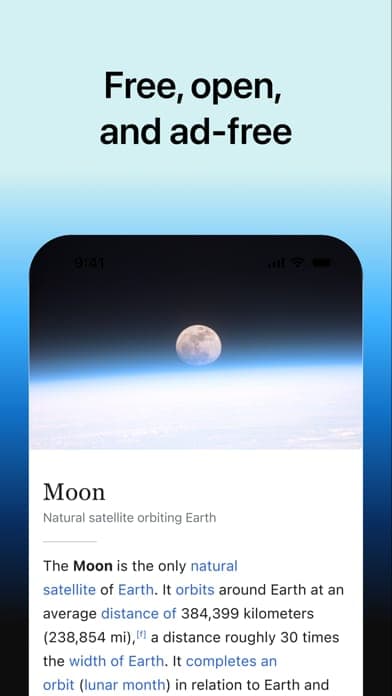
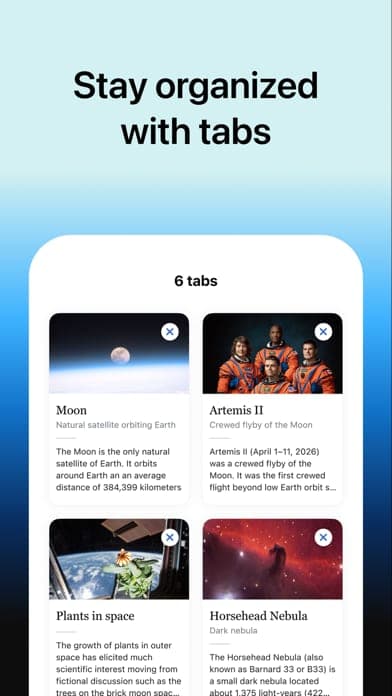
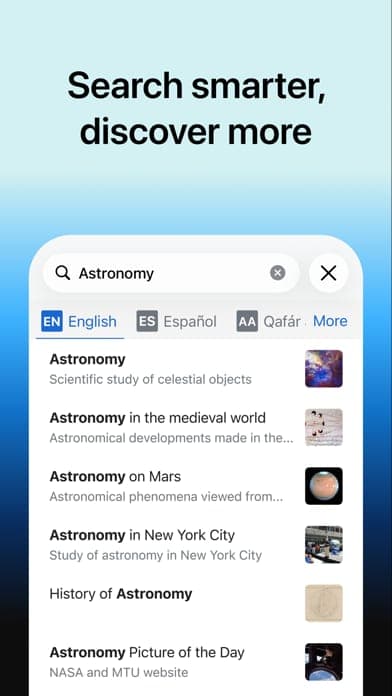
Anyone can read it and almost anyone can edit it, except pages protected against disruption. Editors need not give a real name; logged-out edits are attributed to a temporary account rather than a public IP address. Edits are easy to reverse and experienced editors patrol changes. Beyond the encyclopedia, the Wikimedia family includes Commons for media, Wikidata for structured data, Wiktionary, Wikivoyage and more. The official iOS and Android apps support offline and synced reading lists. According to the App Store release notes, the October 2026 updates renamed Explore to Home (with For You and Community tabs) and began beta-testing semantic search in Arabic, French and Japanese.
Reliability and AI policy
In 2005 Nature compared 42 science articles and counted 162 errors or omissions in Wikipedia against 123 in Britannica; Britannica disputed the result. Later studies are mixed: a 2014 PLOS ONE study reported 99.7% accuracy in pharmacology, while a 2008 study of drug information found Wikipedia answered fewer questions than Medscape. Many schools accept Wikipedia only as a starting point for finding other sources. On AI, the English Wikipedia content guideline prohibits using large language models to generate or rewrite article content, except for translation and basic copyediting of your own writing.
More analysis
Funding, price and comparison
Wikipedia is entirely free and ad-free. The 2024-25 annual report lists about $208.6 million in total support and revenue, of which roughly $184 million (about 88%) came from donations, from around 8 million donors a year; Wikimedia Enterprise contracts brought in $8.3 million. The foundation also says human page views fell about 8% year over year in October 2025 and links this to generative AI and social media. For step-by-step guides wikiHow is a better fit, and Quora and Reddit lean toward Q&A and opinion; Wikipedia focuses on neutral, sourced descriptions.
Screenshots
Plans & pricing
Prices last verified Nov 10, 2026
Free
PersonalFree
Free to read and edit, no account required, no ads. Content is licensed under Creative Commons Attribution-ShareAlike 4.0. The iOS app is free with no in-app purchases.
- Free plan limits
- Everything is free. The wikipedia.org portal shows a donation banner; the US English version suggests $2.75 and says fewer than 2% of readers donate.
- Free trial
- No free trial
Cancellation & refunds
There is no paid plan, so refunds don't apply. Donations are voluntary and go to the Wikimedia Foundation.
Privacy
Under the Wikimedia Foundation privacy policy (in effect since 6 October 2025), you can read, edit and register without giving a real name or email address. The Foundation automatically receives device, browser, language, pages viewed and request times. Edits made while logged out are attributed to a temporary account; per MediaWiki, on wikis with temporary accounts enabled, IP addresses are no longer shown publicly and only people who fight spam and vandalism can see them. All contributions are public and permanent. In most cases personal data is deleted, aggregated or de-identified after 90 days. The Foundation says it does not sell or rent personal information, will not use third-party cookies without permission and does not change behaviour in response to Do Not Track. On the App Store the developer reports collecting a user ID, product interaction and crash data, none linked to identity; Apple has not verified these labels.
Wikipedia alternatives

 7.2/10
OpenStreetMap
The community-built, openly licensed map of the world
 6.9/10
Internet Archive
Nonprofit digital library: Wayback Machine, books, audio, video, software
Frequently asked questions
Is Wikipedia free?
Yes. Reading and editing are free, no account is needed and there are no ads. The iOS app is free with no in-app purchases. The foundation relies on voluntary donations.
Can I trust Wikipedia?
It depends on the article. Some studies show high accuracy, but medical and specialist content has produced mixed results, and many schools don't accept it as a primary source. Check the references at the bottom and cross-check.
Does editing logged out reveal my IP address?
Not publicly any more. Most Wikimedia wikis, including English Wikipedia, now attribute logged-out edits to a temporary account that lasts 90 days; IP addresses are visible only to people with anti-abuse access. Registering requires neither a real name nor an email.
Can I use AI to write Wikipedia articles?
On English Wikipedia, essentially no. Its content guideline on large language models strictly prohibits using LLMs to generate or rewrite article content. The only exceptions are asking an LLM to suggest spelling and grammar fixes to your own writing (with human review) and translating articles from another Wikipedia under separate guidance. Other language editions may have different rules.
Review evidence & sources13
Scores
- Ease of use
- 8.2
- Features
- 8.3
- Value for money
- 9.2
- Performance
- 8.0
- Support
- 6.5
- Privacy & security
- 8.6
Why this score
No account needed to read, familiar search and official apps; the iOS app scores 4.3/5. Marked down because the editing interface and policies are daunting for newcomers.
Why this score
300+ language editions, over 7 million English articles, sister projects such as Commons, Wikidata and Wiktionary, and offline reading lists in the apps. Little personalisation compared with commercial platforms.
Why this score
Free, ad-free and openly licensed, funded mainly by donations (about 88% of total support and revenue in FY2024-25 per the annual report). Few comparable products match this value.
Why this score
Serves nearly 15 billion views a month and ranks among the 10 most-visited websites. Accuracy varies by article: a 2014 PLOS ONE study found 99.7% accuracy in pharmacology, while other studies found gaps in medical content.
Why this score
Extensive help documentation and a volunteer community that patrols edits, but no official customer support or service commitments for readers.
Why this score
No ads, no sale of data, no third-party cookies without permission, and most personal data deleted or de-identified after 90 days; with temporary accounts, logged-out editors' IPs are no longer public. Marked down because all contributions are public and permanent, and IPs remain visible to users with anti-abuse access.
What users say
- App Store (United States)4.3/5 · 6,416
Sources
- Vendor-providedWikipedia portal (wikipedia.org)Nov 10, 2026
- Vendor-providedWikimedia projects portalNov 10, 2026
- Vendor-providedWikimedia Foundation privacy policyNov 10, 2026
- Vendor-providedWikimedia Foundation 2024-25 annual reportNov 10, 2026
- Vendor-providedVietnamese Wikipedia main pageNov 10, 2026
- Vendor-providedWikipedia: AboutNov 10, 2026
- Vendor-providedWikipedia: Large language models (information page)Nov 10, 2026
- Community-reportedWikipedia article (history, statistics, controversies)Nov 10, 2026
- Community-reportedReliability of Wikipedia (summary of studies)Nov 10, 2026
- storeApp Store listing (United States)Nov 10, 2026
- storeiTunes Lookup API (rating, release dates, screenshots)Nov 10, 2026
- Vendor-providedWikipedia: Writing articles with large language models (content guideline)Nov 10, 2026
- Vendor-providedMediaWiki: Temporary accountsNov 10, 2026
Specs & compatibility
- Developer
- Wikimedia Foundation
- Headquarters
- United States
- Launched
- 2001
- Category
- Community
Capabilities
- Works offline
- Public API
- Open source
- Real-time collaboration
- Mobile app
Platforms
- Web
- iOS
- Android
Interface languages
- English
- Vietnamese
- Japanese
- Chinese
- Spanish
- French
- Korean
- German
- Portuguese
- Russian
- Thai
- Indonesian
Integrations
- Wikidata
- Wikimedia Commons
- MediaWiki
Support
- Help center
- Community forum
Change history
- Update.The foundation reports human page views down about 8% year over year and links the decline to generative AI and social media.
- Update.The English Wikipedia goes dark for 24 hours to protest SOPA and PIPA.
- Feature.The English Wikipedia passes 2 million articles.
Full change history (5)
- Update.Nature publishes a comparison of 42 science articles: 162 errors or omissions in Wikipedia versus 123 in Britannica.
- Launch.Jimmy Wales and Larry Sanger launch Wikipedia as a companion to Nupedia (founded 9 March 2000).
About the author
Reviews & comments
Written by readers with a verified email address.
No reviews yet. Have you used Wikipedia? Share your real experience.
Reader reviews are counted separately and do not affect the Editorial Team’s score.
No comments yet. Be the first to share your experience.
Comments are readers’ opinions, not content from the AppDuo Editorial Team.